Integrating the Fighter Jet Military SVG into Professional Design and Fabrication Workflows
In the realm of digital fabrication and custom merchandise creation, the quality of your source assets dictates the efficiency of your output. For designers, small business owners, and hobbyists working with laser cutters or CNC machines, selecting the right vector file is not merely an aesthetic choice; it is a foundational step in project planning. The Fighter Jet Military SVG represents a specific category of high-utility digital assets that bridge the gap between patriotic thematic design and technical precision. This article explores how to effectively integrate this multi-layered design into your existing workflows, ensuring that you maximize both creative potential and operational efficiency.
Understanding the Asset Structure and Technical Requirements
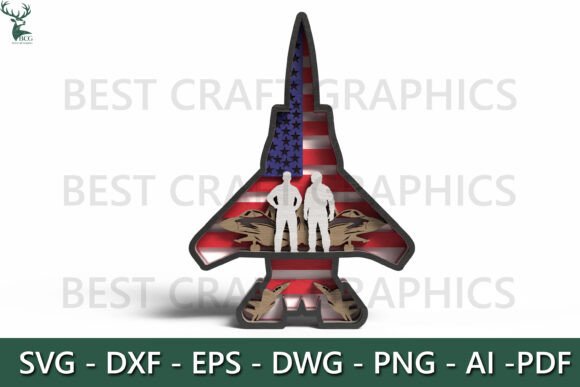
Before importing any file into your design software, it is crucial to understand what constitutes a production-ready vector asset. The featured 3D Fighter Jet SVG design is not a simple single-path outline. It is a complex, multi-layer composition featuring American pilots, fighter aircraft details, and the U.S. flag layered beautifully within a jet silhouette. This structural complexity requires a deliberate approach to file management and machine setup.
When you acquire this digital package, you are provided with a suite of file formats including SVG, DXF, EPS, DWG, PNG, AI, and PDF. Each format serves a distinct purpose in the broader ecosystem of design tools. For users of browser-based platforms like Glowforge or user-friendly interfaces like Cricut Design Space, the SVG format is typically the most reliable for preserving layer integrity. However, professional users operating industrial CNC routers or advanced laser systems may prefer DXF or DWG files for their precise geometric data and compatibility with CAD software like AutoCAD or Fusion 360.
Understanding these distinctions allows you to streamline your preparation phase. By selecting the correct format upfront, you avoid the time-consuming process of converting files, which can often introduce errors such as lost nodes, broken paths, or altered dimensions. This initial decision point is critical for maintaining consistency across multiple projects.
Pre-Production Planning and Material Selection
Successful fabrication begins long before the machine is powered on. The Fighter Jet Military SVG is optimized for cutting with 3mm wood, MDF, or acrylic. This specification is not arbitrary; it reflects the tolerance levels built into the design’s interlocking tabs and slots. When planning your project, you must align your material procurement with these digital constraints.
If you are creating wall décor for Veterans Day gifts or military-themed craft projects, material choice impacts both the visual outcome and the structural integrity of the final piece. Wood offers a warm, traditional aesthetic that complements the patriotic theme, while acrylic provides a modern, sleek finish that highlights the layered depth of the 3D design. MDF serves as a cost-effective middle ground, ideal for painting or finishing if you require a uniform color palette.
During the planning stage, consider the scale of your output. Because this is a multi-layer design, scaling the file up or down affects the fit of the layers. A 10% increase in size might seem negligible, but it can result in loose joints that compromise the 3D effect. Conversely, scaling down may make the intricate details of the pilots and flag difficult to cut cleanly. Always perform a test cut on scrap material of the same thickness to verify fit and tolerance before committing to your final stock.
Workflow Integration: From Import to Execution
Integrating the fighter jet flag soldiers design into your daily workflow requires attention to layer organization. Upon opening the file in your preferred software, you will notice distinct layers for the background, the jet silhouette, the flag elements, and the pilot figures. Properly naming and color-coding these layers is a best practice that enhances efficiency, especially when you are managing multiple jobs simultaneously.
For laser cutting users, assign specific colors to different cutting operations. For instance, you might set the outer silhouette to cut fully through the material, while setting internal details to engrave or score. This differentiation ensures that the machine interprets the design correctly, preventing unnecessary cuts that could weaken the structure. Users of CNC machines should pay close attention to toolpath generation. The intricate curves of the jet and the fine lines of the flag require appropriate bit selection. A smaller end mill may be necessary for detailed areas, while a larger bit can efficiently clear out broader sections.
Compatibility with major platforms such as Glowforge, Cricut, and xTool means that this asset fits seamlessly into both hobbyist and semi-professional environments. However, each platform has its quirks. Cricut users may need to "weld" certain overlapping shapes to prevent double-cutting, while Glowforge users should ensure that their focus height is calibrated for the cumulative thickness of the stacked layers if they are assembling the piece immediately after cutting.
Quality Control and Post-Processing Strategies
The value of a Fighter Jet Military SVG is fully realized only after assembly and finishing. Because this is a 3D layered design, the alignment of each component is paramount. During the assembly phase, use dry-fit techniques to ensure all parts align correctly before applying adhesive. This step allows you to identify any minor discrepancies caused by material variance or machine calibration issues.
Post-processing also includes addressing the edges of the cut material. Laser-cut wood often has charred edges, which can be sanded lightly for a cleaner look or left as-is for a rustic aesthetic. Acrylic edges may require flame polishing or buffing to restore clarity. These finishing touches elevate the perceived quality of the product, transforming a simple cutout into a premium decorative item.
For entrepreneurs selling these items, consistency in post-processing is key to brand reputation. Establishing a standard operating procedure for cleaning, sanding, and assembling ensures that every unit meets the same high standard. This reliability is crucial when fulfilling orders for events like Veterans Day, where volume and timing are often critical factors.
Long-Term Utility and Business Applications
Beyond immediate projects, investing in high-quality, watermark-free digital files like this one offers long-term utility. Unlike physical inventory, digital assets do not degrade, occupy warehouse space, or incur shipping costs until sold. They allow for on-demand production, reducing waste and overhead. This model is particularly advantageous for small business owners and freelancers who need to maintain a diverse catalog without significant upfront investment.
The versatility of the 3D multi-layer design fighter jet flag soldiers extends beyond wall décor. It can be adapted for educational models, museum displays, or commemorative plaques. By understanding the underlying structure of the SVG, creators can modify elements to suit specific client requests, such as changing the text or adjusting the color scheme, provided they have the appropriate editing skills and software licenses.
Furthermore, the inclusion of multiple file formats ensures future-proofing. As technology evolves and new software platforms emerge, having access to universal formats like DXF and PDF ensures that your assets remain usable. This foresight is a critical component of sustainable creative practice.
Final Considerations for Efficient Implementation
To summarize, the effective use of a Fighter Jet Military SVG involves more than just downloading and cutting. It requires a holistic approach that encompasses file selection, material planning, machine calibration, and quality control. By treating the digital file as a integral part of your production chain, you can enhance both the speed and quality of your output.
Remember that this is a digital file, and no physical item is shipped. This distinction places the responsibility of fabrication squarely on the user, but it also grants complete control over the final product. Whether you are a seasoned maker or a newcomer to the field, mastering the nuances of this asset will contribute to a more professional and efficient workflow. Embrace the precision of vector design, respect the capabilities of your machinery, and let the intricate details of the American pilots and flag shine through in your finished work.