Fluffy Pastel Heart 3D Art iPhone Design: A Guide to High-Quality Digital Sublimation Templates
In the rapidly evolving landscape of digital customization, the demand for unique, high-resolution printable assets has never been higher. Among the most sought-after aesthetics in recent years is the Fluffy Pastel Heart 3D Art iPhone Design. This specific visual style combines soft, comforting color palettes with three-dimensional depth, creating a tactile illusion that appeals to a wide demographic of smartphone users. For creators, small business owners, and DIY enthusiasts, understanding how to leverage these digital assets is crucial for producing professional-grade physical products.
This article explores the technical and creative aspects of utilizing AI-generated and Photoshop-refined designs for sublimation printing. We will examine the workflow from digital download to final product, highlighting the importance of resolution, compatibility, and model-specific optimization.
The Appeal of Soft 3D Aesthetics in Mobile Accessories
The visual language of mobile accessories has shifted significantly from flat, minimalist graphics to more textured and dimensional art styles. The Fluffy Pastel Heart 3D Art iPhone Design capitalizes on this trend by merging two powerful psychological triggers: comfort and modernity. Pastel colors, such as soft pinks, baby blues, and mint greens, evoke feelings of calmness and nostalgia. When combined with 3D rendering techniques that simulate fluffy textures or volumetric lighting, the result is an image that appears touchable, even on a flat screen.
For consumers, this aesthetic offers a personalization option that stands out against mass-produced cases. For creators, it represents a niche with high engagement potential. The intricate details required to make a heart look "fluffy" and three-dimensional demand high-quality source files. This is where the distinction between standard web images and print-ready templates becomes critical. A design intended for sublimation must maintain its integrity when scaled and printed on curved or rigid surfaces, requiring precise pixel density and color management.
Technical Specifications for Professional Sublimation
Sublimation printing is a process that uses heat to transfer dye onto materials such as plastic, card, paper, or polymer. Unlike traditional inkjet printing, the ink becomes part of the substrate, resulting in vibrant, long-lasting images. However, this process is unforgiving regarding file quality. Low-resolution images will appear pixelated or blurry when printed at full size.
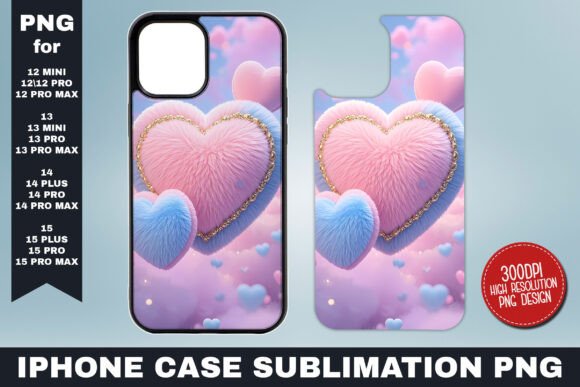
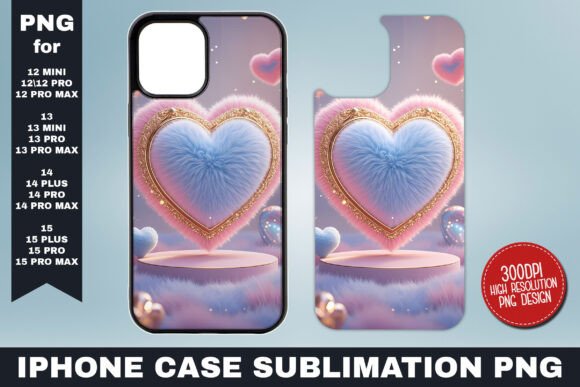
The templates featuring the Fluffy Pastel Heart 3D Art iPhone Design are engineered to meet these rigorous standards. Each file is provided in high-quality PNG format with a resolution of 300 DPI (dots per inch). This density ensures that every gradient, shadow, and highlight in the 3D art remains crisp and clear. The dimensions are optimized at 1004 x 1890 pixels, which corresponds to the specific surface area of various iPhone models. This precision eliminates the need for creators to manually resize or stretch images, which can often lead to distortion or loss of detail.
Furthermore, the use of PNG format supports transparency if needed, although these specific designs typically utilize full-bleed backgrounds to maximize the visual impact of the pastel gradients. The absence of compression artifacts, common in JPEG files, ensures that the subtle transitions in the fluffy texture are preserved during the printing process.
Compatibility and Workflow Integration
One of the primary advantages of these digital assets is their broad compatibility. Whether you are a professional graphic designer using Adobe Photoshop or a hobbyist utilizing Microsoft Word or free alternatives like Canva, the PNG format is universally supported. This accessibility lowers the barrier to entry for individuals looking to start a small business or create personalized gifts.
The workflow for using these templates is straightforward. After downloading the zip file, users can extract the specific PNG corresponding to their target device. For those offering custom services, the inclusion of a full-size original image without cutouts allows for extensive user customization. Creators can overlay text, add additional graphics, or adjust color balances to suit specific client requests before preparing the file for sublimation.
It is important to note that while the designs are created with AI and further refined with Photoshop, the end user does not need advanced editing skills to utilize them effectively. The heavy lifting regarding lighting, texture generation, and composition has already been completed. This allows the user to focus on the production aspect rather than the initial design phase.
Model-Specific Optimization and Coverage
Smartphone designs vary significantly across generations and models. A case designed for an iPhone 12 will not fit an iPhone 15 due to differences in camera bump placement, button locations, and overall dimensions. The comprehensive nature of this digital package addresses this challenge by including 25 distinct PNG files covering a wide range of popular models.
- iPhone 12 Series: Includes templates for the iPhone 12, 12 Pro, 12 Mini, and 12 Pro Max.
- iPhone 13 Series: Covers the iPhone 13, 13 Pro, 13 Mini, and 13 Pro Max.
- iPhone 14 Series: Features the iPhone 14, 14 Pro, 14 Plus, and 14 Pro Max.
- iPhone 15 Series: Supports the iPhone 15, 15 Pro, 15 Plus, and 15 Pro Max.
This extensive coverage ensures that creators can cater to a diverse customer base without needing to source separate design packs for each new phone release. The sizes are optimized for each model, meaning the key elements of the Fluffy Pastel Heart 3D Art iPhone Design are positioned correctly to avoid being obscured by camera modules or buttons. This attention to detail enhances the perceived value of the final product, as it appears professionally tailored rather than generic.
Practical Applications for Creators and Businesses
The versatility of these printable phone case templates extends beyond simple personal use. For small business owners, they offer a low-risk way to expand product lines. Since the item is a digital download, there is no inventory cost associated with storing physical goods. Creators can print on demand, reducing waste and overhead.
Educators and workshop leaders can also utilize these files to teach students about digital printing processes, color theory, and the basics of e-commerce. The high-resolution nature of the files makes them excellent examples for demonstrating the difference between screen resolution and print resolution.
Additionally, these designs make wonderful gifts for friends and family. The ability to customize the output allows for a personal touch that mass-market retailers cannot replicate. Whether for birthdays, holidays, or special occasions, a phone case featuring a unique, high-quality 3D art design serves as a functional and sentimental keepsake.
Considerations for Color Accuracy and Production
While the digital files are optimized for quality, it is essential to understand the variables involved in physical production. Screen differences mean that colors may vary slightly between what is viewed on a monitor and the final printed product. Monitors are backlit and use RGB color space, while sublimation printers use CMYK inks. This conversion can sometimes result in slight shifts in hue or saturation.
To mitigate this, creators should perform test prints on their specific equipment. Calibrating monitors and using high-quality sublimation paper and blanks can help achieve results that closely match the digital preview. It is also advisable to consider the base color of the phone case blank. White or light-colored blanks are ideal for pastel designs, as they allow the true colors of the Fluffy Pastel Heart 3D Art iPhone Design to shine through without interference from a dark background.
Remember that mockups and photos seen in listings are for visual representation only and are not included in the download. The value lies in the raw, high-resolution PNG files that empower the user to create their own unique physical products. By understanding the technical requirements and leveraging the comprehensive model coverage, users can maximize the potential of these digital assets, creating professional-quality items that resonate with the current trends in mobile accessory aesthetics.