Choosing the Right Halloween Haunted House Papercut SVG for Layered Crafts
As the autumn season approaches, crafters and DIY enthusiasts begin searching for projects that capture the eerie yet whimsical spirit of Halloween. Among the myriad of options available, the Halloween Haunted House Papercut SVG has emerged as a popular choice for those looking to create depth and dimension in their decorations. Unlike flat printed images or simple vinyl decals, layered papercut designs offer a tactile, three-dimensional quality that transforms ordinary paper into intricate shadow boxes, lanterns, and wall art.
However, selecting the right digital file involves more than just picking a spooky image. Understanding the technical specifications, compatibility with cutting machines, and the intended final application is crucial for a successful project. This guide explores what makes these layered designs distinct, how they compare to other crafting formats, and what factors you should consider before downloading or purchasing a file.
Understanding the Layered Papercut Technique
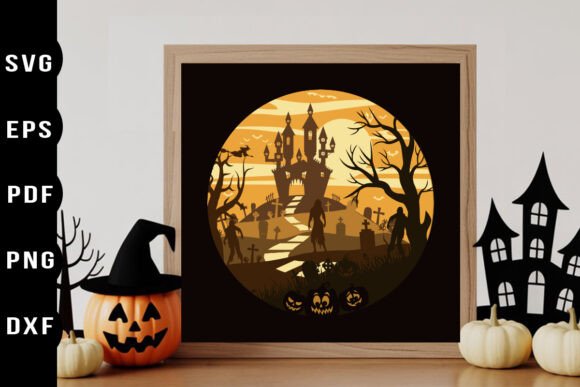
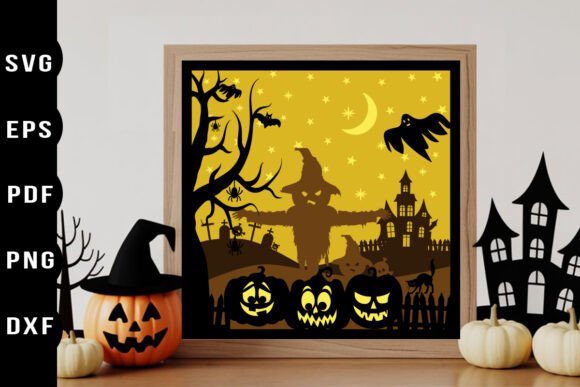
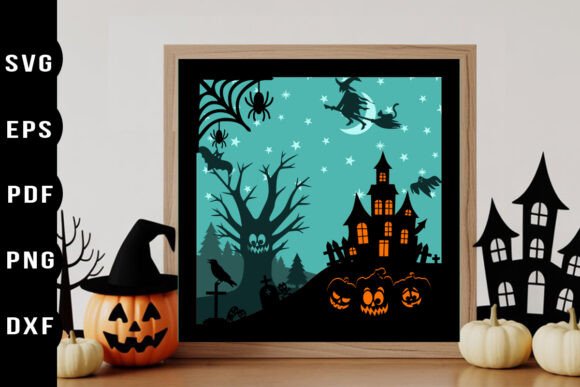
The core appeal of a Halloween Haunted House Papercut SVG lies in its construction. These files are not single-image vectors but rather collections of separate layers, each representing a different depth plane of the scene. When assembled, typically with foam tape or spacers between each sheet of cardstock, the layers create a parallax effect. Light passes through the cutouts, casting shadows that enhance the haunted atmosphere.
This technique differs significantly from standard single-layer cutting. In a traditional project, you might cut a silhouette of a house and place it on a background. In a layered design, you might have five to ten separate pieces: a foreground with tombstones or gnarled trees, mid-ground elements like the house facade and windows, and background layers featuring a full moon or distant hills. The precision required means that the quality of the SVG file is paramount. Poorly optimized nodes or overlapping paths can lead to cutting errors, wasted material, and frustration during assembly.
Digital Cutting vs. Hand Cutting: Evaluating Your Approach
One of the primary decisions when working with these designs is choosing between machine cutting and hand cutting. A high-quality Halloween Haunted House Papercut SVG package often includes resources for both methods, but the workflow varies considerably.
Machine Cutting Advantages
For users with electronic cutting machines such as Cricut, Silhouette, or Brother ScanNCut, SVG files are the industry standard. These vector formats allow the machine to follow precise paths, ensuring clean edges and accurate registration marks for layering. The scalability of SVGs is a significant benefit; you can resize the haunted house to fit a small greeting card or a large wall-mounted shadow box without losing resolution. However, machine cutting requires careful material selection. Intricate details in a haunted house design, such as window panes or spiderwebs, demand cardstock that is sturdy enough to hold its shape but thin enough to cut cleanly without tearing.
Hand Cutting Considerations
Not every crafter owns a cutting machine, nor does every project require one. For hand-cutting enthusiasts, the inclusion of PDF files with colored contours and flipped layers is essential. These printable versions serve as templates that can be glued directly onto the back of the paper or traced using a light box. While this method is more time-consuming and requires a steady hand with a craft knife, it offers a meditative, traditional crafting experience. It is also cost-effective for one-off projects where setting up a machine might be overkill. The tradeoff is precision; complex curves and tiny details are harder to replicate by hand, so simpler layer designs may be more suitable for manual cutting.
File Formats and Compatibility: What to Look For
When evaluating a Halloween Haunted House Papercut SVG, the included file formats determine its versatility and ease of use. A comprehensive package should offer more than just an SVG file.
- SVG Files: Ideal for most cutting machines. Look for files where layers are already separated and colored black for easy identification. This reduces the time spent organizing layers in your software.
- EPS and AI Files: These fully editable vector formats are crucial for professional designers or advanced users who wish to modify the design. If you want to add custom text, change the shape of the moon, or adjust the roofline, having access to the original vector paths in Adobe Illustrator or similar software is invaluable.
- PNG Files: High-resolution PNGs (such as 5000x5000px at 300 DPI) with transparent backgrounds are useful for digital projects, sublimation printing, or as reference images. They ensure that if you choose to print the design rather than cut it, the quality remains sharp.
- PDF Files: As mentioned, these are vital for hand-cutters. Ensure the PDF includes contour lines and, ideally, mirrored layers if the design requires specific backing arrangements.
Compatibility extends beyond file types. Users should verify that the SVG is optimized for their specific machine software. Some files may contain excessive anchor points that slow down older machines, while others may lack proper grouping, requiring manual cleanup before cutting. Reading user reviews or checking preview images can help assess the file’s readiness for use.
Comparing Use Cases: Where Layered Designs Shine
The versatility of a Halloween Haunted House Papercut SVG allows it to be adapted for various applications, each with different requirements.
Shadow Boxes and Wall Art
This is the most common application. The depth created by layering works best when viewed from a slight angle, making shadow boxes ideal. For wall art, consider the lighting. Backlit frames or LED strips placed behind the layers can dramatically enhance the spooky effect, turning the paper cutout into a glowing lantern. In this scenario, opacity matters; using lighter colored paper for background layers can help diffuse light evenly.
Greeting Cards and Invitations
For smaller projects like cards, the scale of the design must be reduced. Not all haunted house designs are suitable for miniaturization. Intricate details may become impossible to weed or cut at a small size. When choosing a file for cards, look for designs with bolder lines and fewer tiny elements. The layered effect adds a premium feel to handmade invitations, making them memorable for party guests.
Scrapbooking and Party Decor
In scrapbooking, layered elements can be used as focal points on pages. Here, durability is less critical than aesthetics. For party decorations, such as table centerpieces or hanging ornaments, weight becomes a factor. Multiple layers of heavy cardstock can sag if not properly supported. Using lighter weight paper or reinforcing the back with cardboard may be necessary for larger hanging installations.
Making the Right Choice for Your Project
Deciding whether a Halloween Haunted House Papercut SVG is the right resource depends on your skill level, tools, and desired outcome. If you are new to layered paper crafts, start with a design that has fewer layers (three to five) and larger cutout areas. This minimizes the risk of tearing and simplifies the assembly process. As you gain confidence, you can tackle more complex designs with intricate details and deeper layering.
Consider the time investment. A multi-layered haunted house can take several hours to cut, weed, and assemble. If you are preparing for a last-minute event, a simpler design or a pre-printed alternative might be more practical. Conversely, if you enjoy the process of crafting as much as the result, the detailed nature of these SVGs provides a rewarding challenge.
Additionally, think about the display environment. Will the piece be exposed to humidity or direct sunlight? Paper is sensitive to environmental changes. For long-term displays, consider using archival-quality cardstock and sealing the finished piece in a frame with UV-protective glass.
Final Thoughts on Crafting with Precision
The Halloween Haunted House Papercut SVG represents a blend of traditional paper artistry and modern digital convenience. It offers a unique way to bring spooky charm to your home through tangible, handcrafted decor. By carefully evaluating the file formats, understanding the differences between machine and hand cutting, and matching the design complexity to your skill level, you can ensure a satisfying crafting experience.
Whether you are creating a glowing lantern for your porch or a detailed invitation for a Halloween gathering, the key lies in preparation and patience. Take the time to review the layers, test cuts on scrap paper, and plan your assembly strategy. With the right approach, these digital files can transform simple sheets of paper into captivating works of art that stand out in any Halloween celebration.