3D Padded Jacket Design: Bridging Digital Innovation and Fashion Creativity
The fashion industry is undergoing a quiet but profound transformation. For decades, the path from concept to consumer was linear, physical, and often wasteful. Today, that line is blurring as digital tools reshape how garments are conceived, visualized, and marketed. At the forefront of this shift is 3D padded jacket design, a niche yet rapidly expanding area where technical precision meets artistic expression. As brands and independent creators seek faster, more sustainable workflows, the ability to create hyper-realistic digital garments has moved from a luxury to a necessity.
This evolution is not just about replacing physical samples with pixels; it is about unlocking new creative possibilities. Whether you are a seasoned fashion designer looking to streamline your production pipeline or a 3D artist exploring the metaverse, having access to high-quality, ready-to-use assets can significantly accelerate your workflow. This is where specialized resources become invaluable, allowing creators to focus on innovation rather than starting from scratch.
The Shift Toward Digital-First Fashion Workflows
Traditionally, designing a padded jacket involved sketching, pattern making, sourcing materials, and creating multiple physical prototypes. Each iteration required time, money, and material resources. In contrast, a digital-first approach allows designers to experiment with silhouette, volume, and texture in a virtual environment. The rise of remote collaboration and global supply chains has further accelerated this trend. Teams spread across different continents need a shared visual language, and 3D models provide exactly that—a universal, manipulable representation of a product.
Modern consumers are also driving this change. With the growth of e-commerce, shoppers expect detailed, accurate visualizations of products before they buy. Static images no longer suffice; interactive 3D views and augmented reality try-ons are becoming standard expectations. For businesses, this means that having a robust library of digital assets is crucial for marketing and sales. A well-rendered 3D padded jacket can be used across websites, social media, and virtual showrooms, ensuring brand consistency and reducing the need for costly photoshoots.
Why Padded Jackets Present Unique Design Challenges
Not all garments are created equal in the digital realm. Padded jackets, with their complex structures, quilting patterns, and voluminous shapes, present specific challenges for 3D artists. Achieving the right balance between realism and performance is critical. The fabric must look soft yet structured, the padding must appear lofty without looking artificial, and the stitching needs to follow the contours of the body naturally.
This is why generic 3D models often fall short. They may lack the nuanced details that make a garment feel authentic. High-quality 3D padded jacket design requires meticulous attention to texture mapping, lighting, and physics simulations. Creators need assets that are not only visually appealing but also technically sound, with clean topology and optimized file sizes for real-time rendering. When these elements come together, the result is a digital garment that can withstand close inspection and serve various purposes, from static renders to interactive experiences.
Unleashing Creativity with Ready-Made Digital Assets
Building a high-fidelity 3D jacket from scratch is a time-intensive process. It involves modeling, UV unwrapping, texturing, and rigging. For many professionals, this overhead can stifle creativity and slow down project timelines. This is where curated digital assets offer a significant advantage. By leveraging pre-made, professionally crafted designs, creators can bypass the initial technical hurdles and dive straight into customization and storytelling.
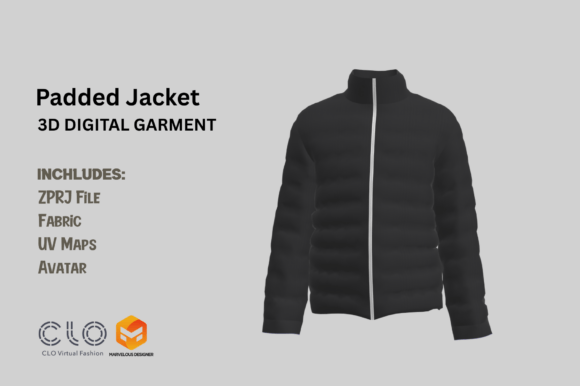
Consider the value of a comprehensive package like the Padded Jacket 3D Digital Garment design, available exclusively on Creative Fabrica. This meticulously crafted digital asset includes everything needed to bring fashion ideas to life immediately. It features a ZPRJ file, which ensures compatibility with leading 3D fashion software, allowing for seamless integration into existing workflows. But the utility does not stop there.
The package also includes high-quality fabric textures that capture the subtle sheen and depth of real materials. These textures are paired with detailed UV maps, ensuring that patterns and logos align correctly on the garment’s surface. Furthermore, the inclusion of an avatar for immediate use means designers can visualize fit and drape instantly, without needing to source or rig their own character models. This level of completeness makes it an ideal tool for both fashion designers and 3D artists who want to produce professional-grade results efficiently.
Practical Applications for Designers and Entrepreneurs
The versatility of a high-quality 3D padded jacket design extends beyond traditional fashion design. Here are several ways professionals and entrepreneurs can leverage such assets:
- Digital Fashion Showcases: Brands can create immersive online lookbooks where users can rotate and zoom in on garments, providing a richer shopping experience.
- Virtual Product Lines: As digital fashion gains traction in gaming and virtual worlds, designers can create exclusive skins and outfits for avatars, opening up new revenue streams.
- Marketing and Advertising: High-resolution renders can be used in social media campaigns, reducing the cost and environmental impact of physical photoshoots.
- Rapid Prototyping: Designers can test different colorways and material combinations quickly, presenting clients with multiple options without producing physical samples.
- Educational Resources: Educators and students can use these assets to study garment construction, texture application, and 3D rendering techniques in a practical, hands-on manner.
For freelancers and small business owners, time is money. Using a pre-built asset allows them to take on more projects or deliver higher quality work within tighter deadlines. It levels the playing field, enabling smaller entities to compete with larger brands that have extensive in-house 3D teams.
Navigating the Future of Digital Garment Creation
As technology continues to advance, the line between physical and digital fashion will continue to blur. We are seeing increased adoption of digital twins, where every physical product has a corresponding digital counterpart. This trend is driven by the need for sustainability, efficiency, and enhanced customer engagement. In this context, mastering 3D design tools and understanding how to utilize digital assets effectively is becoming a core competency for fashion professionals.
However, technology alone is not enough. The human element—creativity, taste, and strategic thinking—remains paramount. Tools like the 3D padded jacket design from Creative Fabrica are enablers, not replacements. They empower creators to execute their visions with greater speed and precision. The key is to view these assets as building blocks in a larger creative process. By combining high-quality base models with unique customizations, designers can create distinctive pieces that stand out in a crowded market.
Making the Most of Your Digital Toolkit
To get the most out of a digital garment asset, consider the following best practices:
- Understand the File Formats: Familiarize yourself with the ZPRJ file format and ensure your software is up to date. This ensures smooth importing and editing.
- Experiment with Textures: While the included textures are high-quality, do not hesitate to modify them. Adjusting roughness, normal maps, or color gradients can help tailor the jacket to your specific brand aesthetic.
- Lighting Matters: Even the best model can look flat under poor lighting. Invest time in setting up realistic lighting environments to highlight the jacket’s volume and texture.
- Contextualize the Avatar: Use the provided avatar as a starting point, but consider posing it in ways that reflect your target audience’s lifestyle. This adds narrative depth to your presentations.
- Stay Updated: The 3D fashion landscape evolves rapidly. Keep an eye on new features in your software and emerging trends in digital garment design to stay competitive.
In conclusion, the move toward digital fashion is not a fleeting trend but a fundamental shift in how we create, share, and consume clothing. By embracing tools like the 3D padded jacket design available on Creative Fabrica, creators can position themselves at the forefront of this innovation. It offers a practical, efficient, and creatively liberating way to bring fashion ideas to life, whether for physical production or virtual exploration. As the industry continues to evolve, those who adapt early and leverage these digital resources will find themselves well-equipped to meet the demands of a modern, connected world.